
La vaca cega desconfiada
_FRASE_TOP
Concise summary in English outlining the negative impacts of the "Wert Law" (LOMCE, 2013) on the Catalan-Valencian language, alongside the documentation of how subsequent legislative changes and regional resistance managed to reduce, diminish, or annul its effects.
"Al País Valencià els Pressupostos de la Generalitat Valenciana per al 2018 donaven 13 milions d'euros a 15 centres educatius concertats d'educació segregada. Els partits del Consell PSPV i Compromís mostraren el seu rebuig a aquest efecte de la llei."
The Ley Orgánica para la Mejora de la Calidad Educativa (LOMCE), pushed by the then Minister of Education José Ignacio Wert, introduced mechanisms that severely undermined the language immersion and protection systems in Catalonia and the Valencian Community:
Downgrading Language Status: The law reclassified co-official regional languages (like Catalan/Valencian) from "Core" or "Compulsory" regional subjects to "Specialty" subjects (asignaturas de especialidad). This stripped them of federal-level protections regarding minimum teaching hours, leaving their scheduling vulnerable to state-backed litigation.
The €6,000 Private School Subsidy Mandate: The law forced regional governments to finance private school education (up to €6,000 per student) for families demanding Spanish as the sole vehicular language, if the public school system could not guarantee a Spanish-only stream.
Centralization of Curricula: It gave the central government in Madrid the exclusive power to determine the criteria and contents of core subjects, effectively diluting the hours regional administrations could allocate to teaching in and about the local language and culture.
The aggressive measures of the LOMCE faced massive legal, political, and institutional pushback, leading to their eventual reversal through two primary fronts:
In December 2020, the Spanish government passed the LOMLOE (Ley Celaá), which explicitly dismantled the core architectures of the Wert Law:
It completely eliminated the reference to Spanish as the sole "vehicular language" of education.
It annuled the financial penalties and private school subsidies targeting regional language immersion models.
It returned competencies to autonomous communities, allowing them to legally guarantee that students master both Spanish and their co-official languages by the end of compulsory education.
As highlighted in your provided document from À Punt Mèdia (2018), regional governments like the Valencian Consell (formed by the left-wing coalition PSPV and Compromís) actively fought against the residual inertia of the Wert Law.
The LOMCE had legally shielded and reinforced state funding for private, single-sex (segregated) schools. In the 2018 Valencian Budgets, the regional government found itself legally bound to pay €13 million to 15 conservative concerted (semi-private) schools that segregated by sex due to the legal framework Wert had left behind.
The public rejection of this payout by the Valencian government served as a major catalyst to push for the complete repeal of the LOMCE, showing how the law forced regional funds away from public, plurilinguistic, and inclusive models toward segregated private entities.
Summary Takeaway: The "Wert Law" attempted to systematically relegate the Catalan-Valencian language to a secondary status in the school system. However, due to institutional resistance, regional budget battles (like the one in Valencia in 2018), and the ultimate passage of the LOMLOE (Ley Celaá) in 2020, the most damaging linguistic components of the Wert Law have been effectively nullified.
 |
Borden, doncs cavalquem |
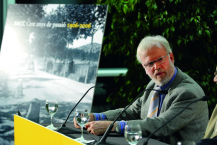 |
Javier del Arco de Izco |
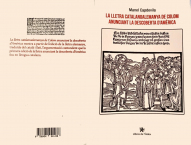 |
La 1ª carta impresa de Colom ho fou en català (UNH5) |
 |
Escola equestre catalana de Nàpols |
 |
Teoria dels 4 humors - Humorisme - |
 |
Chassepot rifle muzzle |
 |
La ciutat on es desenvolupa l'acció de La Celestina |
 |
Colom i la carta en Alemany |
 |
André Rossfelder-Magallaes i l'antimeridià |
 |
La Semeuse - Marianne l'Occitanne |
